

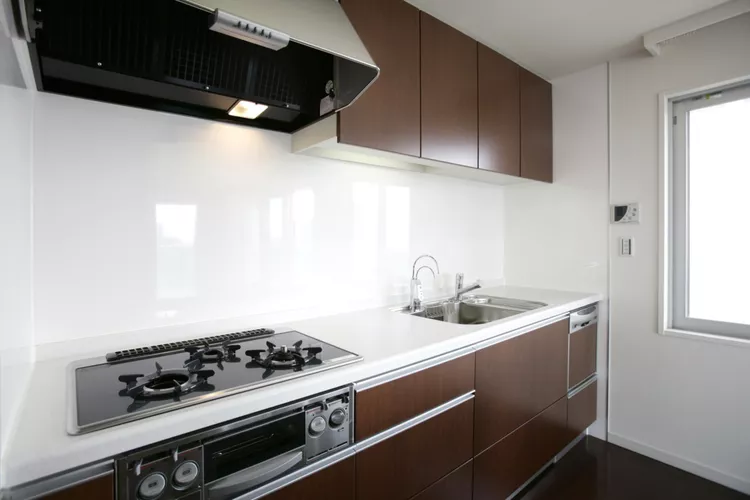
When planning a kitchen or bathroom renovation, the backsplash is often treated as an afterthought—a secondary detail meant simply to catch stray water droplets or rogue pasta sauce splatters. For decades, the standard default choice has been ceramic or porcelain tile. But while tile offers traditional charm, it brings a major, long-term headache that almost every homeowner grows to despise: grout lines. Grout is inherently porous, acting like a magnet for grease, mildew, and stubborn stains that require hours of aggressive scrubbing to keep clean.
If you are looking for a sleek, ultra-modern alternative that completely eliminates the frustrations of traditional tile while adding a luminous, architectural feel to your home, a solid glass sheet backsplash might be the perfect solution. Far from a passing fad, solid glass panels represent the pinnacle of minimalist design, offering unmatched wall protection alongside a highly customizable canvas of pure color.
The Core Science: Understanding Back-Painted Glass
To appreciate the value of a glass sheet backsplash, it is important to understand exactly how it is manufactured. This is not simply a clear piece of window glass slapped over a painted drywall surface. True architectural glass backsplashes utilize a specialized process known as back-painting.
During production, a high-durability, industrial-grade paint is applied directly onto the reverse side of a heavy pane of clear glass. For the highest quality results, look for manufacturers who bake this finish onto the glass in a controlled factory kiln. This thermal bonding process ensures that the color coat is permanently fused to the glass substrate, guaranteeing that the finish will never flake, chip, blister, or peel away over time due to ambient moisture or cooking heat.
The Clear Glass DIY Trap
Some well-meaning DIYers attempt to cut costs by purchasing standard clear glass panels and mounting them directly over an existing painted wall to let the wall color show through. Avoid this approach entirely.
Because it is impossible to create a 100% airtight vacuum seal between a loose sheet of glass and a slightly uneven drywall surface, microscopic gaps will remain. Over time, household dust, tiny insects, and airborne cooking vapors will find their way behind the panel. Once trapped back there, these debris particles are completely visible from the front, and because the glass is permanently mounted, you can never clean them out. You are effectively stuck looking at trapped dust for the lifespan of your kitchen. Back-painted glass bypasses this issue entirely by completely blocking out the wall behind it.
Architectural Profiles and Applications
One of the greatest benefits of opting for a solid glass backsplash is its extreme visual cleanliness. Without the distracting grid lines of grout, the glass serves as a fluid, uninterrupted architectural plane that can make even the most compact kitchens feel significantly larger and brighter.
┌────────────────────────────────────────────────────────┐ │ POPULAR GLASS BACKSPLASH SCALES │ ├───────────────────────┬────────────────────────────────┤ │ The 6-Inch Splash │ Minimalist strip to protect the│ │ │ junction where counter meets │ │ │ the drywall wall. │ ├───────────────────────┼────────────────────────────────┤ │ The Half-Height Run │ Spans from the countertop up │ │ │ to the bottom edge of floating │ │ │ open wood shelves. │ ├───────────────────────┼────────────────────────────────┤ │ The Full-Height Block │ Extends entirely from counter │ │ │ up to the lower edge of upper │ │ │ cabinets or the ceiling. │ └───────────────────────┴────────────────────────────────┘ Because glass is custom-fabricated, you have complete control over its physical height and shape. If you have an exceptionally long kitchen counter or a tall accent wall behind a professional range, you will need to account for certain raw material size limitations.
On large expanses, master glaziers will introduce clean, minimal, vertically stacked seams where separate large panels meet. When executed by an expert, these seams are incredibly tight and disappear into the background far better than hundreds of interlocking tile grout lines ever could.
The Financial Reality: Material and Installation Costs
There is no sugarcoating it: transitioning from basic ceramic tile to a custom-fabricated sheet of architectural glass requires a larger initial financial investment. However, when compared to alternative premium slab materials like solid quartz, granite, or custom concrete extensions, glass remains highly competitive.
Price Comparison Breakdown
| Backsplash Material Type | Average Installed Cost (Per Sq. Ft.) | Longevity & Maintenance Factors |
| Standard Ceramic Tile | $15 – $30 | Cheap materials, high long-term grout cleaning maintenance. |
| Glass Mosaic Tile | $31 – $55 | Excellent shimmer, but creates a high density of grout lines. |
| Solid Glass Sheet | $45 – $60 | Premium initial cost, zero maintenance, lifetime durability. |
| Solid Quartz/Marble Slab | $70 – $120+ | Very heavy, requires structural reinforcement, stones require sealing. |
Note: The pricing for glass sheets fluctuates based on the color category you select. Solid, standard factory colors are the most affordable, whereas exotic metallic finishes—such as shifting silvers, rich coppers, or brushed golds—require specialized metal-flake paints that drive up the raw material costs.
The Engineering Mandate: Safe Installation
Installing a giant, heavy panel of glass in a kitchen environment is a high-stakes job that is best left to professional glass technicians. Unlike tile, which can be individual cut and adjusted on the fly with a simple wet saw, a solid glass panel must be perfectly measured and pre-cut before it arrives at your house.
The Fabrication Process
Every single wall outlet, light switch, and under-cabinet screw hole must be mapped out using precise digital templates. The glass is then cut, the edges are polished smooth, and the panel is sent to a furnace to undergo tempering.
Critical Safety Rule: If you are planning to install a glass sheet backsplash directly behind a high-output gas range or cooktop, you must specify that the fabricator use tempered glass. Tempering alters the internal structural tension of the glass, allowing it to easily withstand the extreme thermal fluctuations of cooking without cracking. Once glass is tempered, it cannot be cut or drilled into again, which is why your initial measurements must be flawlessly accurate.
Mounting Techniques
Most professional installers secure the back-painted glass sheets directly to smooth, clean drywall using specialized, non-reactive mirror mastic (adhesive). Because standard construction adhesives contain harsh chemicals that can eat through the back-painted color coat over time, using a specialized glass-safe mastic is non-negotiable.
Once the panel is pressed firmly against the wall, the perimeter boundaries—where the glass meets the side walls, upper cabinetry, and the countertop—are sealed with premium, mildew-resistant silicone caulk. This flexible silicone bead creates a completely waterproof barrier, preventing any countertop spills or sink splashing from seeping behind the glass and damaging your home's structural framing.
For a more industrial or high-tech aesthetic, you can opt to have the panels anchored to the wall using decorative stainless steel standoff screws. While this look is stunning, it requires a highly skilled glazier to drill the corresponding mounting holes perfectly through your walls.
The Main Benefits of Solid Glass
When you step back and look at the functional performance of a glass sheet backsplash, it becomes clear why it has become a favorite choice for modern architects and interior designers:
-
Effortless Wipeability: Glass is entirely non-porous. Splattered tomato sauce, sizzling bacon grease, and spilled red wine sit directly on the ultra-smooth surface rather than soaking in. A simple spray of standard glass cleaner and a swipe of a microfiber cloth returns the wall to a pristine, mirror-like shine.
-
Zero Sealing Required: Unlike natural luxury stones like Carrara marble or granite—which feature microscopic pores that require annual applications of chemical sealants—glass is chemically inert. It will never stain, and it never needs to be resealed for the rest of its functional life.
-
Maximized Light Reflection: If your kitchen suffers from a lack of natural windows or feels tucked away in a dark corner of your home, glass acts as a massive light multiplier. Ambient light from windows and under-cabinet LED light strips bounces beautifully off the glass face, immediately making the entire room feel airier, brighter, and more energetic.
Crucial Considerations Before Committing
Before running out to sign a contract with a local glass fabricator, take a moment to evaluate how this material will interact with your specific space and lifestyle.
1. The Design Style Match
A solid glass sheet is undeniably modern, leaning heavily into a clean, minimalist, or industrial design language. If your home embraces a highly rustic, traditional country, or heavily textured old-world European aesthetic, a hyper-smooth glass panel might clash visually with the surrounding architecture. Think carefully about whether you want a seamless plane of color or the tactile, broken texture of individual tiles.
2. Finding the Right Glass Thickness
Architectural backsplashes typically range in thickness from 1/4-inch to 1-inch. Thinner 1/4-inch glass is excellent for standard, flat walls where weight is a concern, whereas thicker 1/2-inch or 1-inch options offer a chunkier, premium, three-dimensional depth that looks incredibly high-end when the polished outer edges are left exposed.
3. Exploring Custom Geometric Shapes
Don't fall into the trap of assuming your backsplash must be a strict, boring rectangle. Because modern glass is cut using computer-guided water-jet systems, you can work with your designer to incorporate elegant organic curves, arched top profiles behind your range, or stepped geometries that perfectly frame your architectural layout.